
Social Media Impressions Explained and How to Track Them
Learn what social media impressions mean, how they differ from reach and engagement, and how to track and improve them across today's top platforms.
You publish a post, watch the dashboard climb, and feel a brief surge of confidence. Then you notice that likes barely moved, new followers didn't arrive, and the platform now labels similar activity as views instead of impressions. The number is real, but your interpretation may not be.
Social media impressions measure exposure, not attention, intent, or audience growth. They're useful because they show how often content enters feeds and screens, but they become misleading when you treat every display as a new person reached or every view as proof that the message worked. This guide gives you a practical way to read the metric, account for platform changes, and use tools such as XBurst without mistaking inflated visibility for progress.
What Counts as a Social Media Impression
Your analytics panel shows a number rising in real time. Each increase can feel like another person discovering your work, but an impression doesn't identify a new viewer. It records a display of content.
If one person sees the same post three times, the platform can record three impressions. The person still counts as one unique account in reach reporting. This distinction is central to how platforms and advertisers interpret exposure, as explained in this glossary term for impressions and in guidance on reach versus impressions.
The display is not the action
An impression answers a narrow question: How many times did the platform display this content?
A view usually suggests that video playback began, although the exact threshold varies by platform. A click indicates an intentional action, because someone selected a link, profile, or interactive element. Those events can happen after an impression, but they aren't interchangeable.
Consider a short post in a busy feed. The platform loads it on a user's screen, and the user scrolls past without pausing. That display may count as an impression. The same user returns later, sees it again, and creates another impression. If the user clicks through to your profile, that click becomes a separate signal of intent.
This is why a post can have substantial exposure and modest public interaction. Passive consumption still puts the message in front of an account, and repeated exposure can support awareness even when the viewer never likes or replies.
Why the raw total needs caution
Measurement systems can also include activity that doesn't represent deliberate human attention. Pre-fetching, logged-out viewers, automated traffic, and other technical delivery behaviors may affect what a platform reports. The precise treatment differs by network, content type, and reporting surface.
Practical rule: Treat the impression total as the beginning of your investigation. Don't treat it as the conclusion.
For X creators, a focused explanation of impressions in a thread can help when you need to interpret exposure across a sequence rather than a single post. The next question is whether those displays came from a broad audience, repeated exposure to the same people, or both.
Impressions vs Reach vs Engagement
The three metrics answer different questions, so reporting them as if they were synonyms creates bad decisions.
- Impressions: Count total displays, including repeat displays to the same person.
- Reach: Counts unique viewers or accounts exposed to the content.
- Engagement: Counts actions such as likes, replies, reposts, shares, saves, and clicks.
A billboard makes the distinction easier. Impressions represent the number of times the billboard was passed or displayed. Reach represents the unique drivers who passed it. Engagement represents the drivers who honked, stopped, took a photo, or followed the sign to a destination.
| Metric | What It Counts | Question It Answers | What Movement Tells You |
|---|---|---|---|
| Impressions | Every reported display | How often did the content appear? | Distribution and repetition are changing |
| Reach | Unique viewers or accounts | How many distinct people saw it? | Audience breadth is expanding or contracting |
| Engagement | User actions | Did people respond or show intent? | The message generated a reaction or next step |
Reach can't exceed impressions when both metrics use compatible definitions, because every unique viewer must first contribute at least one display. Impressions can rise while reach stays flat if the same accounts encounter the post repeatedly. Engagement can also fall while impressions rise, especially when an algorithm delivers content to passive viewers or repeatedly surfaces it without prompting action.
Match the metric to the decision
Use impressions to evaluate distribution and repetition. They can tell you whether a post is entering feeds often, but they don't tell you whether the content connected.
Use reach when awareness depends on finding new accounts. If your reach expands while impressions remain close to it, the content is likely appearing before a broader set of people with less repetition.
Use engagement when you care about resonance or community response. Replies and reposts often reveal more about whether an idea prompted a meaningful reaction than exposure alone.
Organic distribution has its own complications, particularly on Facebook, where definitions and reporting conditions can shift. A practical resource on organic reach on Facebook 2026 is useful when you're comparing exposure across Facebook content and paid activity.
The most common reporting error is combining these metrics into one vague statement such as “the post performed well.” A clearer report says whether the post gained visibility, reached new accounts, or encouraged action.
How Major Platforms Measure Impressions
A platform label doesn't guarantee a universal definition. Each network decides what counts as a display, view, or eligible exposure, and those rules can change without making historical dashboards easy to reconcile.
On X, impressions generally refer to the times a post appears in feeds or search results. X reporting can distinguish total and unique counts in some post and advertising contexts, while feed ranking considers signals such as recency and engagement. Because X doesn't provide a single native reach figure in the same way as some other networks, creators should avoid treating total impressions as unique audience size. The explanation of tweet impressions is useful when you're interpreting post-level data.
Meta changed the comparison
Meta made a particularly important change in April 2025, when Facebook and Instagram moved away from format-specific impressions and plays in favor of a unified views metric, as documented in this analysis of Meta's video metric shift. A view can register when content enters the screen and can include replays, regardless of how much someone watched.
That means older impression data and newer view data aren't automatically comparable. A rising view line may reflect repeated playback or a changed counting rule rather than a larger unique audience. Keep the platform label, format, date range, and definition beside every trend line.
LinkedIn uses language such as members reached for unique exposure and reports impressions for appearances in feeds. YouTube separates thumbnail impressions from video views, so a thumbnail being shown and a video being watched represent different events. TikTok commonly uses play counts as a practical proxy for exposure, while Reddit's impression reporting is often closer to ad-server delivery for paid campaigns than to a complete picture of organic exposure.
Use the label, then inspect the rule
The safest workflow is to document what the dashboard currently calls the metric and what its help documentation says the metric counts. When you're evaluating video campaigns, the definition should also influence the creative itself. Resources on video ad creative frameworks can help you plan around the difference between a display, a playback start, and sustained viewing.
Don't merge platform totals into one “impressions” column without preserving the source definitions. Cross-platform comparisons are directional unless the underlying events are comparable.
Reading Impressions as Reach, Frequency, and CPM
A raw impression total becomes more useful when you connect it to unique audience, repetition, or cost.
Frequency is the most direct derived measure:
Frequency = impressions ÷ reach
If a campaign has many displays but little additional reach, frequency is rising. That may be intentional when a familiar message needs reinforcement, or it may signal that the campaign is repeatedly addressing the same people.
CPM, or cost per thousand impressions, is used in paid media to express the cost of purchased exposure. The formula is:
CPM = spend ÷ impressions × 1,000
The underlying definition of CPM as a paid social metric is described in Hootsuite's social media metrics guide. The calculation is useful for comparing paid delivery, but it doesn't convert organic exposure into a paid equivalent. Organic posts can have an implied cost based on your labor or production process, yet that isn't the same measurement as an advertiser's media spend.
| Metric | Formula | What it tells you |
|---|---|---|
| Reach | Unique viewers reported by the platform | Audience breadth |
| Frequency | Impressions ÷ reach | Repetition among those viewers |
| CPM | Spend ÷ impressions × 1,000 | Paid cost of delivered exposure |
| Engagement rate | Engagements ÷ impressions or another stated base | Response relative to reported exposure |
Ratios reveal the story
Suppose impressions climb but reach barely changes. The likely explanation is not automatically stronger distribution. The campaign may be serving the same audience more often.
Suppose reach grows but engagement rate weakens. Your content may be entering more feeds, but the new audience isn't responding at the same level as your existing audience. That can still be useful for awareness, but it deserves a different conclusion from “the content resonated.”
Always state the denominator in your report. An engagement rate based on impressions answers a different question from one based on reach, followers, or views. Without that context, two apparently similar percentages can describe different behaviors.
When More Impressions Do Not Mean Better Results
Exposure can grow while value declines. Socialinsider's 2026 benchmark report records TikTok engagement rate by followers at 2.60%, down 10% year over year, showing why strong visibility and strong interaction shouldn't be treated as the same outcome (Socialinsider benchmarks).
The broader lesson is more important than the platform comparison. A post can receive repeated passive exposure, appear in algorithmic recommendations, or benefit from a distribution change without earning replies, clicks, follows, or other meaningful actions.
Separate vanity exposure from useful exposure
Ask one threshold question: Did the exposure move an account closer to a valuable next action?
That action might be a follow, reply, repost, profile visit, click, save, or return visit. The right action depends on the purpose of the post. Awareness content may succeed without immediate clicks, while a product announcement needs stronger evidence of intent.
Review impression quality through three lenses:
- Audience composition: Determine whether the people seeing the post resemble the audience you want to build.
- Repetition: Check whether rising impressions come from new accounts or repeated delivery to existing viewers.
- Downstream behavior: Compare exposure with replies, reposts, profile activity, clicks, or other outcomes tied to the post's purpose.
An impression is not worthless because it produces no public action. Passive exposure can still support recognition. But it shouldn't receive the same weight as exposure that expands reach or leads to a deliberate response.
Use the impression total to locate a performance question, not to declare victory. If visibility rises and every quality signal remains flat, reduce your confidence in the result and inspect distribution before producing more of the same content.
Practical Ways to Grow Impressions on X
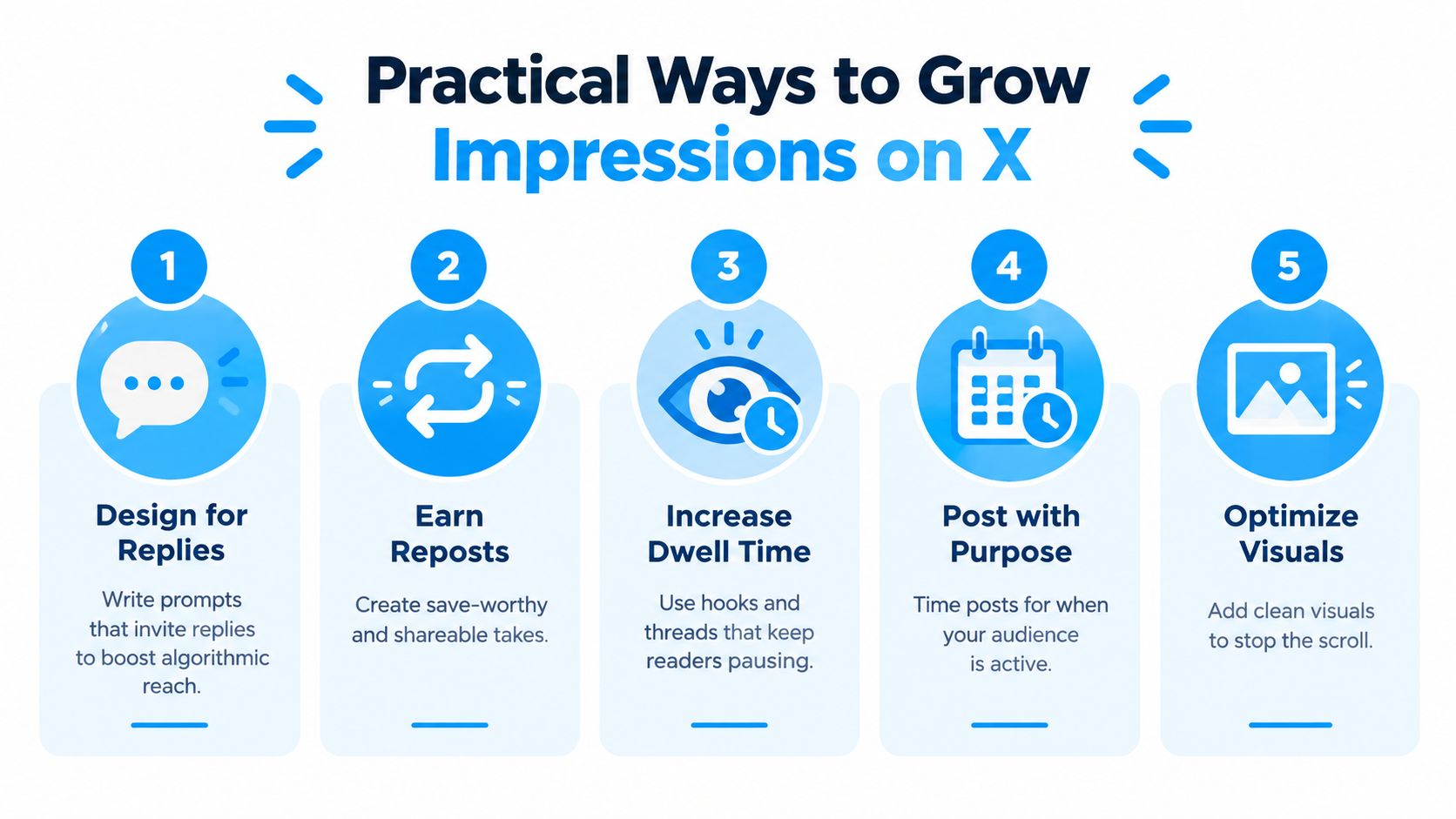
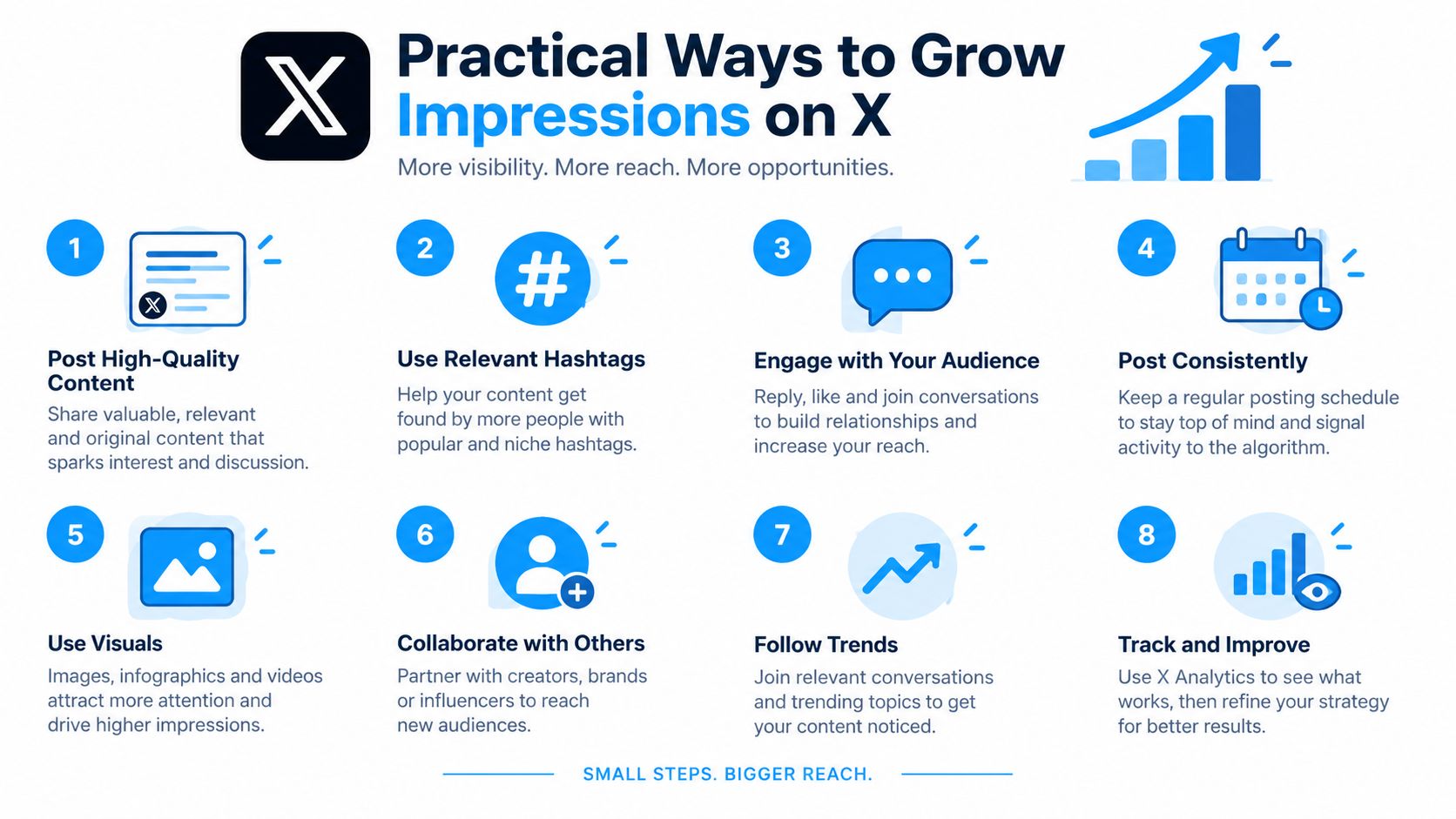
Growing impressions on X starts with making posts easier to notice and easier to respond to. The aim isn't to trigger a temporary spike. It's to earn distribution from people who are likely to care about the subject.
Build for a visible response
Open with the useful tension, conclusion, or question. A reader should understand why the post matters before deciding whether to continue. Threads can unpack a complicated idea, but each post should move the thought forward instead of repeating the setup.
Write prompts that invite specific replies. “What are you working on?” is broad. A question that asks founders to choose between two concrete approaches gives the audience a clearer way to participate.
Native media can help stop the scroll, particularly when the visual clarifies the idea rather than decorating it. A chart, annotated screenshot, or short demonstration gives people a reason to pause, while a strong first line supplies the context.
Participate where attention already exists
Reply to larger accounts in your niche when you have a relevant contribution, not merely a request for visibility. A useful reply can introduce your perspective to people already reading the conversation.
Recurring formats can also make your subject recognizable. A weekly teardown, progress note, or concise lesson gives followers a reason to look for the next post. Consistency makes performance easier to evaluate because you can compare similar formats rather than mixing unrelated experiments.
Choose timing from your own evidence
Don't rely on generic “best time to post” advice. Review when your audience responds, then test posting windows that fit your schedule and content type. Timing can help a strong post receive early attention, but it can't rescue an unclear idea.
Avoid controversy and trend-jacking as a default growth method. They may generate exposure without building a durable connection to your work. A smaller stream of relevant impressions is often more useful than a large spike from people who will never return.
Tracking Impressions With XBurst Dashboards
A dashboard should help you make a decision, not just display a larger number of cards. For an X account, start with the account-level overview, then move to post-level evidence.
Set the date range before interpreting the trend. A single day can be distorted by one post, a conversation, or a distribution change. Compare consistent periods, and keep the selected range visible in exported reports so you don't mistake a partial period for a full one.
Pin the views that answer real questions
A practical monitoring set includes:
- Impressions Trend: Use it to see daily velocity and identify when distribution changed.
- Top Posts: Sort by impression-to-engagement ratio or another stated efficiency measure, then inspect why the strongest posts earned attention.
- Reach versus Impressions: Use the split to detect frequency drift, where total exposure rises without comparable audience expansion.
XBurst offers analytics for impressions, likes, replies, and rates, along with post-level review and date-window analysis. It can sit alongside native X Analytics, not replace your responsibility to confirm definitions and reporting periods.

Spend less attention on lagging vanity signals
Raw likes can be useful for identifying reactions, but they don't explain exposure by themselves. Follower totals show audience size, not whether your latest posts reached those followers or attracted relevant new accounts.
Use exports when you need an audit trail. A CSV lets you reconcile third-party reporting with native data by matching post IDs, dates, and selected metrics. Different polling intervals can produce discrepancies, so investigate a mismatch instead of combining totals.
For a lightweight habit, review the trend and recent posts briefly each day. Reserve the deeper analysis for a weekly session, when you can compare formats, topics, audience breadth, and downstream actions. The XBurst dashboard demo provides a way to inspect the workflow before deciding whether it fits your reporting process.
Building a Healthy Impression Habit
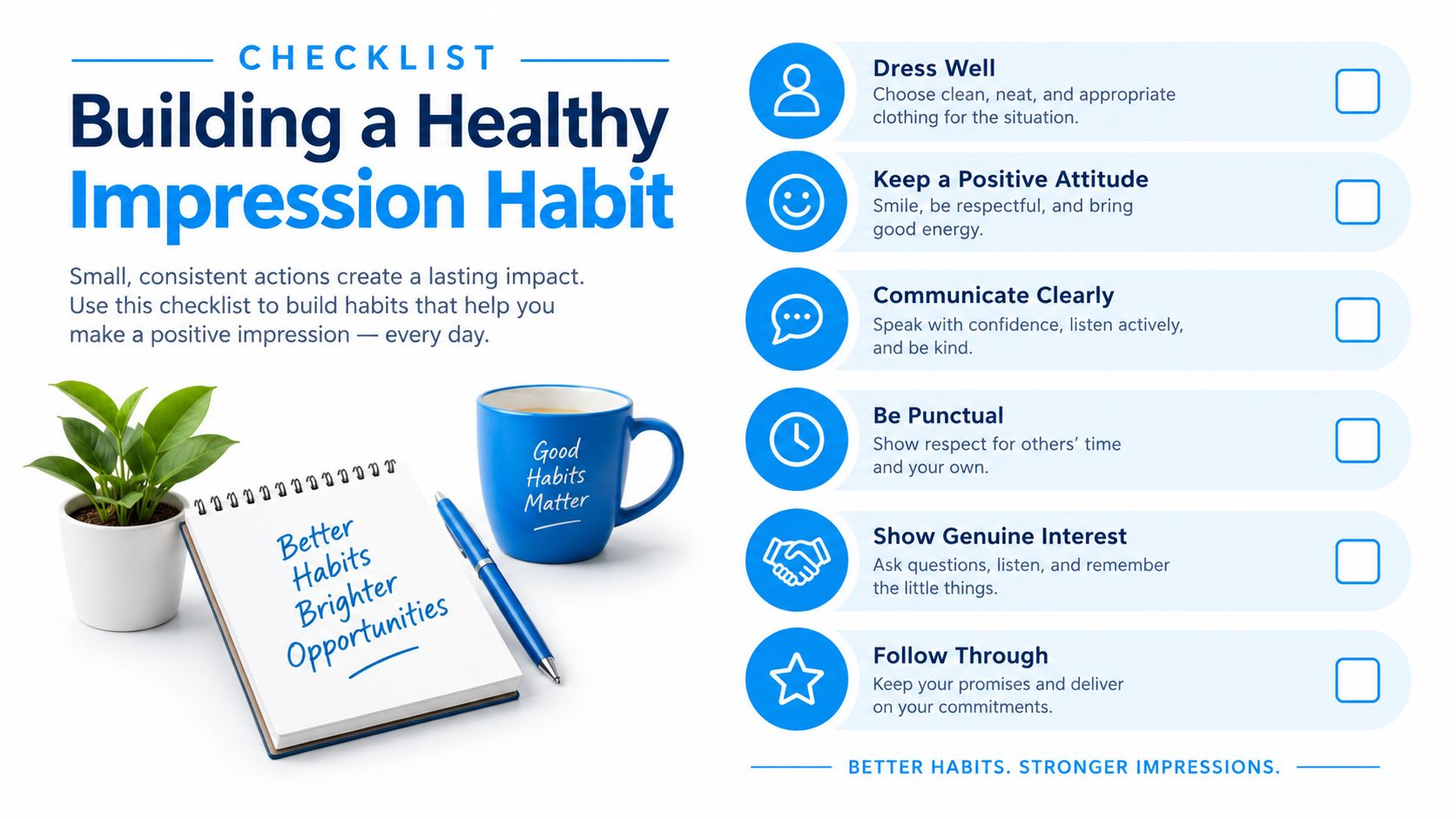
A healthy impression habit keeps the metric connected to the objective, building an audience that returns and responds. Before reacting to a new number, run a short checklist.
- Compare exposure with reach: Did the post find new accounts, or did existing viewers see it repeatedly?
- Check response efficiency: Are replies, reposts, clicks, or follows keeping pace with exposure?
- Inspect frequency: Is repetition helping recall, or is it replacing audience expansion?
- Identify audience quality: Did the content reach people who fit your niche and future goals?
- Name the next decision: Should you repeat the format, adjust the hook, change distribution, or stop investing in it?
Impressions are an input metric, not an outcome. Sustainable growth usually requires broader reach, efficient repetition, and steady engagement quality, even when the impression line fluctuates. Don't punish a post because its exposure is lower if it reached the right people and produced valuable conversations.
Revisit your assumptions regularly. Platform algorithms change, labels shift, and dashboards can reclassify events without giving historical data a clean translation. Keep a record of definitions, date ranges, and denominators so future comparisons remain honest.
XBurst brings X content performance into a workflow that tracks impressions alongside engagement signals and helps identify which posts deserve closer analysis. Visit XBurst to explore its dashboard and see whether its reporting tools fit your daily and weekly review routine.