
Twitter Growth Tool Explained for Creators and Teams
Learn what a Twitter growth tool does, how it works, and how to choose one. Features, workflows, metrics and risks for creators and teams.
You publish consistently on X, yet your reach barely changes. Your posts are thoughtful, your profile is complete, and scheduled content fills the calendar. Still, follower growth stays flat, idea-hunting consumes time, and the results feel random.
The problem is often the growth model. Posting more isn't the same as creating more distribution opportunities. X rewards signals created inside conversations: an early reply that reaches the right thread, a useful response that earns profile visits or bookmarks, and repeated interaction between an author and engaged readers. Those signals can matter more than a feed crowded with scheduled updates.
A Twitter growth tool helps by making those moments easier to find and manage. It can surface relevant discussions, help you prepare timely replies, and show which conversations led to meaningful attention. The tool handles part of the routine. Your judgment still determines whether the reply adds insight, answers a real question, or sounds like an interruption.
Niche discovery matters too. A creator who finds a focused conversation about a specific customer problem may reach fewer people at first, yet build stronger recognition than someone broadcasting general posts to a larger audience. Early timing gets you into the room. Interaction depth gives people a reason to remember you.
If engagement feels unusually low, begin with this guide to low Twitter engagement and diagnose the pattern before changing your posting volume. Then separate growth work into three jobs: creation, discovery, and measurement. This framework helps you judge tools by the conversations they help you enter, the relationships they help you develop, and the evidence they provide about sustainable audience growth.
What a Twitter Growth Tool Is and How It Works
Think of a Twitter growth tool as a combination of radar and workshop. The radar scans the moving environment around your account, looking for relevant discussions, emerging topics, and posts that are gaining attention. The workshop helps you turn an idea into a post or reply, place it into a workable publishing routine, and inspect what happened afterward.
That model is more useful than calling every product a scheduler or analytics dashboard. A scheduler handles distribution. An analytics product handles reporting. A growth platform connects those activities to the decisions that create reach: which conversation to join, what to say, when to respond, and what to repeat.
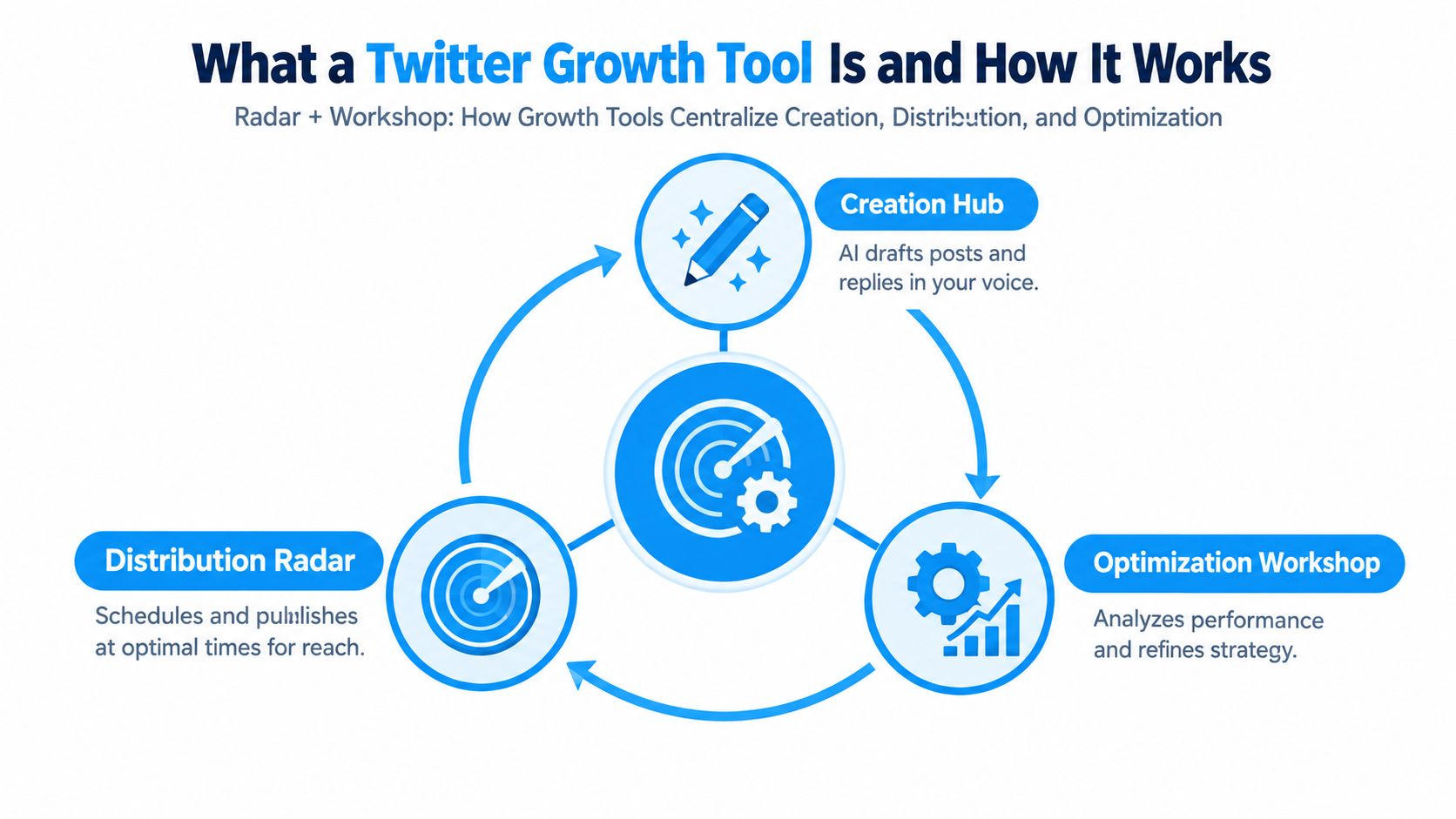
The basic operating loop
Most tools begin when you connect an X account. The platform can then organize posts, replies, follower changes, and performance history in one workspace. Some products also analyze your existing writing so generated drafts can reflect your vocabulary, rhythm, and recurring ideas rather than sounding like generic social copy.
The radar side scans timelines, selected accounts, or niche topics. Its job isn't to tell you to comment everywhere. It should help you identify conversations where your response can add context, explain a trade-off, answer a question, or offer a useful observation while the discussion is still active.
The workshop side supports drafting and scheduling. You might write directly in a dashboard, send a draft through Telegram, or prepare a queue for later publication. That convenience matters, but automation should preserve a human review step, especially for replies where context and tone determine whether your contribution feels helpful or intrusive.
Why these tools emerged
Native X analytics have historically offered limited long-term follower-growth history. A widely cited review explains that X itself doesn't provide long-term historical follower-growth data, which led third-party tools to track daily gains, unfollows, trends, and account comparisons instead (history of Twitter advertising and analytics). These tools can build a follower history from the day tracking starts, making retention and direction easier to inspect.
That changed the practical question from “How many followers do I have?” to “What happened to audience growth after I changed my content or engagement routine?” For a solo creator, the value is less switching between disconnected screens. For a team, it's a shared operating layer for ideas, approvals, publishing, monitoring, and review.
Practical rule: Hire a growth tool to remove friction from good decisions, not to manufacture activity.
Key Features That Actually Move Reach on X
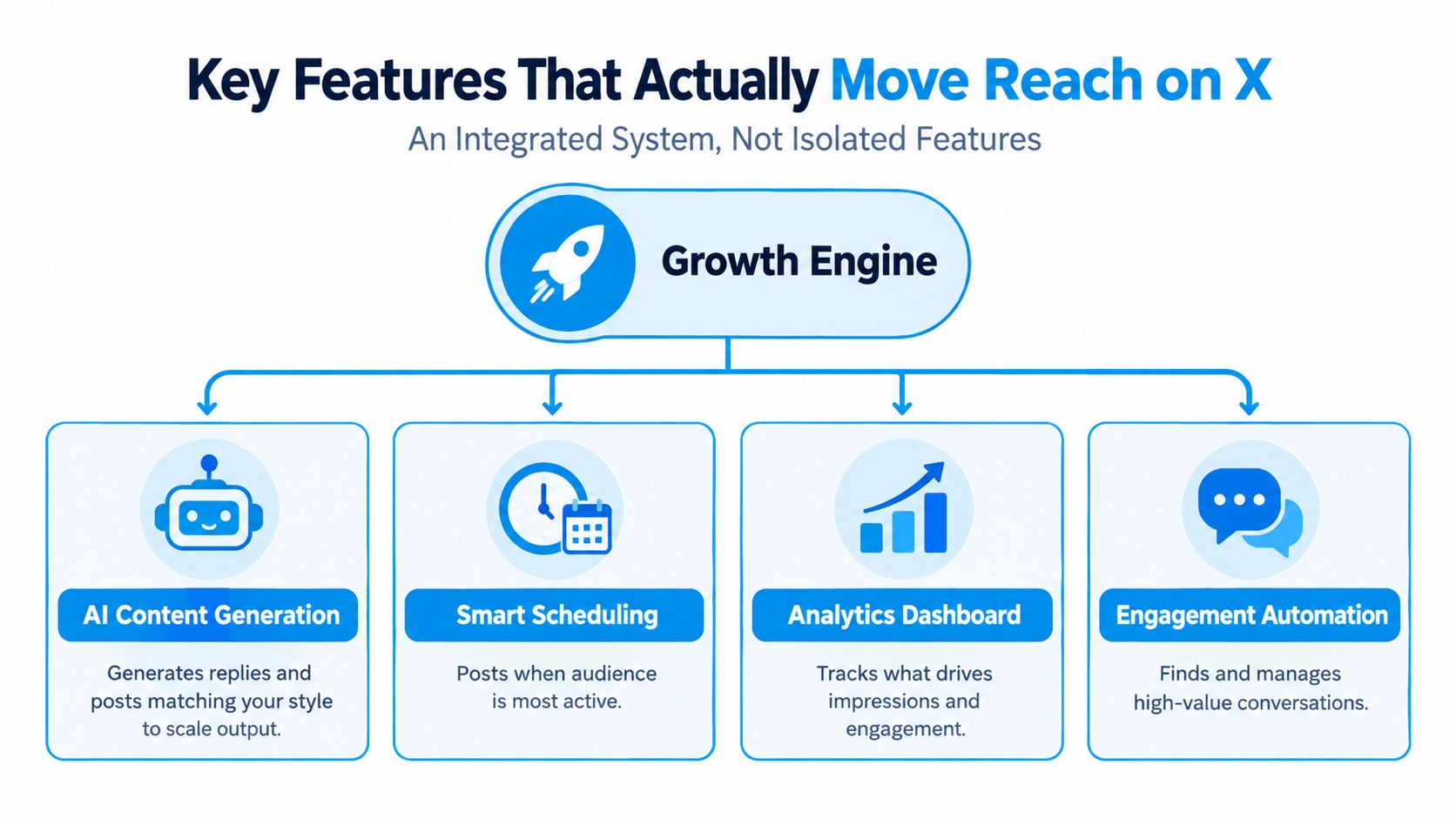
A growth tool earns its place when it improves relevance, timing, or conversation depth. More AI controls do not automatically improve reach. The useful setup links idea development, niche discovery, publishing, engagement, and review into one working loop.
Start with voice, not volume
AI drafting is helpful when it turns a rough idea into a clearer post or reply without replacing your judgment. A good system learns how you frame problems, how directly you write, which examples feel natural, and where you draw boundaries. You remain responsible for accuracy, context, and whether the idea deserves attention.
Replies need tighter review than original posts. You can revise an original post before anyone sees it. A reply enters another person's discussion, where a generic or overly polished answer can make you appear inattentive. Use AI for a first draft, then add a concrete observation, question, or experience that reflects your own knowledge.
Find high-opportunity conversations
Timeline scanning can create more growth opportunities than adding another item to a content calendar. X tends to reward active attention signals more strongly than passive exposure. Replies, profile clicks, bookmarks, reposts, and interaction between an author and responders can show that a post is generating meaningful interest.
The strongest opportunity tools rank posts by topic fit, account relevance, and conversation potential, rather than raw impressions alone. They should help you spot a founder seeking implementation advice, a creator describing a problem your audience shares, or a specialist thread beginning to attract informed responses. Early reply timing matters because a useful contribution has more space to be noticed before the discussion fills.
Author interaction depth matters too. A reply that starts a real exchange can create a stronger path to profile visits and future discussion than a quick reaction. Treat the thread like a small workshop: contribute something specific, respond to the author's answer, and leave when you no longer have useful context.
Detect niches before they become crowded
Broad trend alerts often produce noise. Niche discovery is more useful for specialists because it connects emerging subjects with a defined audience. Research and intelligence tools now sit alongside scheduling and analytics, supporting early signal detection and semantic topic matching through an overview of X research tools.
A practical workflow watches for repeated questions, new terminology, and conversations where informed replies are still scarce. That helps you find a smaller group with a real problem, rather than competing for attention around every broad trend.
Smart scheduling still supports consistency. Use it for durable ideas and planned announcements when your day is full, then protect flexible time for discussions that cannot be prepared in advance. Guidance on automatically posting tweets is most useful when automation supports a deliberate routine instead of filling the feed indiscriminately.
Measure the signals behind reach
Analytics should connect an action with an outcome. If a reply creates profile visits but few follows, examine whether the profile clearly promises the value suggested by the conversation. If a post receives likes but no replies or bookmarks, it may be easy to consume without giving people a reason to discuss or save it. If one topic repeatedly brings qualified conversations, develop more ideas around it instead of chasing each new trend.
Follower management has a legitimate operational role. Tracking gains and unfollows can reveal audience fit, while bulk actions can reduce repetitive work for teams. The boundary appears when a tool encourages indiscriminate following, mass replies, or behavior that treats people as records rather than participants. Reach grows through timely, relevant exchanges, not activity volume alone.
How to Choose the Right Twitter Growth Tool for Your Goals
The right tool depends on the constraint you need to remove. A creator with strong ideas but little time needs a different setup from a founder who wants to identify prospects, while a social team needs approvals and account separation before it needs more automation.
Start by writing the workflow in plain language. “I need more growth” is too vague to evaluate software. “I need to find relevant discussions, draft replies in my voice, schedule original posts, and review follower changes” gives you a buying checklist.
Compare the tool against the real job
Use these questions during a trial:
- Voice authenticity: Can you edit the style profile, reject weak drafts, and keep personal judgment in the loop?
- Opportunity quality: Does the discovery system surface conversations you would want to join, or does it rank popular posts?
- Analytics depth: Can you inspect daily movement, unfollows, reply quality, and historical trends rather than only a top-line follower count?
- Workflow fit: Can you work from the dashboard or a connected channel such as Telegram without creating extra handoffs?
- Team control: Does the product support approvals, separate accounts, roles, and a clear record of who changed what?
- Commercial fit: Does the pricing tier match your current account complexity, or are you paying for enterprise features before you need them?
A product that performs one task beautifully may still be the wrong choice if it forces you to export data, copy drafts between systems, or monitor replies in another inbox.
A compact decision matrix
| Use Case | Must Have Capabilities | What to Validate Before Buying |
|---|---|---|
| Solo creator | Voice-aware drafting, conversation discovery, scheduling, readable analytics | Whether drafts sound like you and whether surfaced threads fit your niche |
| Founder building in public | Topic monitoring, fast reply workflows, post scheduling, profile and follower insights | Whether the tool helps connect public conversations to your positioning without pushing spam |
| Small social team | Multi-account support, approvals, shared calendars, engagement monitoring, account-level reporting | Whether permissions, review steps, and reporting are clear for every collaborator |
| Growth marketer | Trend intelligence, audience comparisons, conversion-aware reporting, repeatable workflows | Whether the dashboard supports decisions about topics and audience quality, not just volume |
Package labels such as Starter, Pro, and Elite are only useful when they map to a real operating difference. Starter should cover essential creation, publishing, and basic measurement. Pro makes sense when AI replies, style analysis, or deeper discovery will save meaningful time. Elite becomes relevant when multiple accounts, expanded niche analysis, or team coordination are part of the workflow.
Don't buy a tool because it promises “automation.” Ask what it automates, what it leaves for human review, and whether it gives you evidence that the workflow is improving.
Real Workflows How Creators Founders and Teams Use Growth Tools Daily
A good growth system feels less like a content factory and more like a set of repeatable decisions. The creator, founder, and team below may use similar features, but each assigns them a different job.
The solo creator
A creator starts the day by checking a focused opportunity feed rather than opening the general timeline. The tool highlights relevant posts from people and topics in the creator's niche. The creator reads the original discussion, chooses one thread where personal experience adds value, and uses AI to shape a draft without surrendering the final wording.
The reply goes out while the conversation is active. Later, the creator reviews profile visits, replies, bookmarks, and follower movement connected with the day's activity. Original posts are scheduled from a small queue, but live replies remain flexible because no calendar can predict which discussion will become useful.
A creator's advantage isn't replying to everything. It's recognizing the few conversations where expertise makes the profile worth visiting.
The founder building in public
A founder uses trend monitoring to watch for recurring problems, customer language, and questions that reveal demand. In the morning, the founder saves a small set of topics, drafts an opinion or build update, and schedules it for a consistent publishing window. During the day, the founder responds to relevant posts with specific lessons from the product, including limitations and trade-offs.
When someone asks a detailed follow-up, the founder continues the public thread before moving to a private conversation where appropriate. The tool can organize these interactions and provide reminders, but the founder decides whether a person is asking for help, evaluating a product, or sharing an experience.
This routine turns content into a listening system. The founder isn't broadcasting a message into an empty room. They're collecting language from the market and using it to improve both communication and product positioning.
The social team
A team begins with a shared content calendar and a defined approval path. One person monitors relevant creators and conversations, another drafts posts and replies, and a reviewer checks factual accuracy, brand tone, and compliance before publication. Account-level analytics then show whether the team is attracting the intended audience or merely generating activity.
The weekly review focuses on decisions. Which topics produced meaningful replies? Which posts attracted profile clicks but failed to convert visitors into followers? Which conversations should the team monitor more closely? A centralized workspace reduces duplicate work, while clear ownership prevents two people from responding to the same thread with conflicting messages.
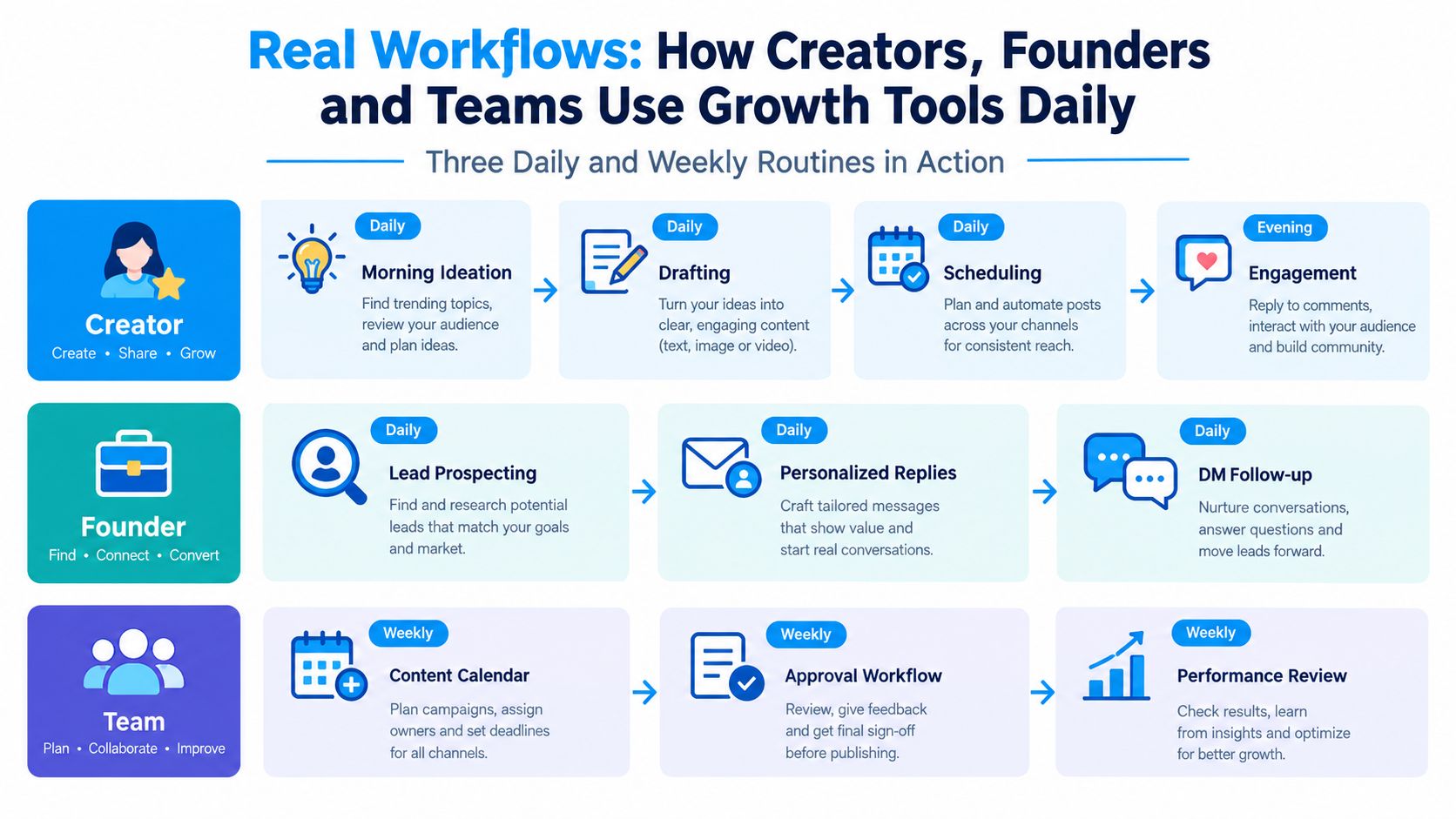
The common pattern is simple: discover, contribute, publish, review. The balance changes by role, but none of these workflows treats scheduled posts as the entire growth strategy.
Metrics to Track and How to Interpret Growth Correctly
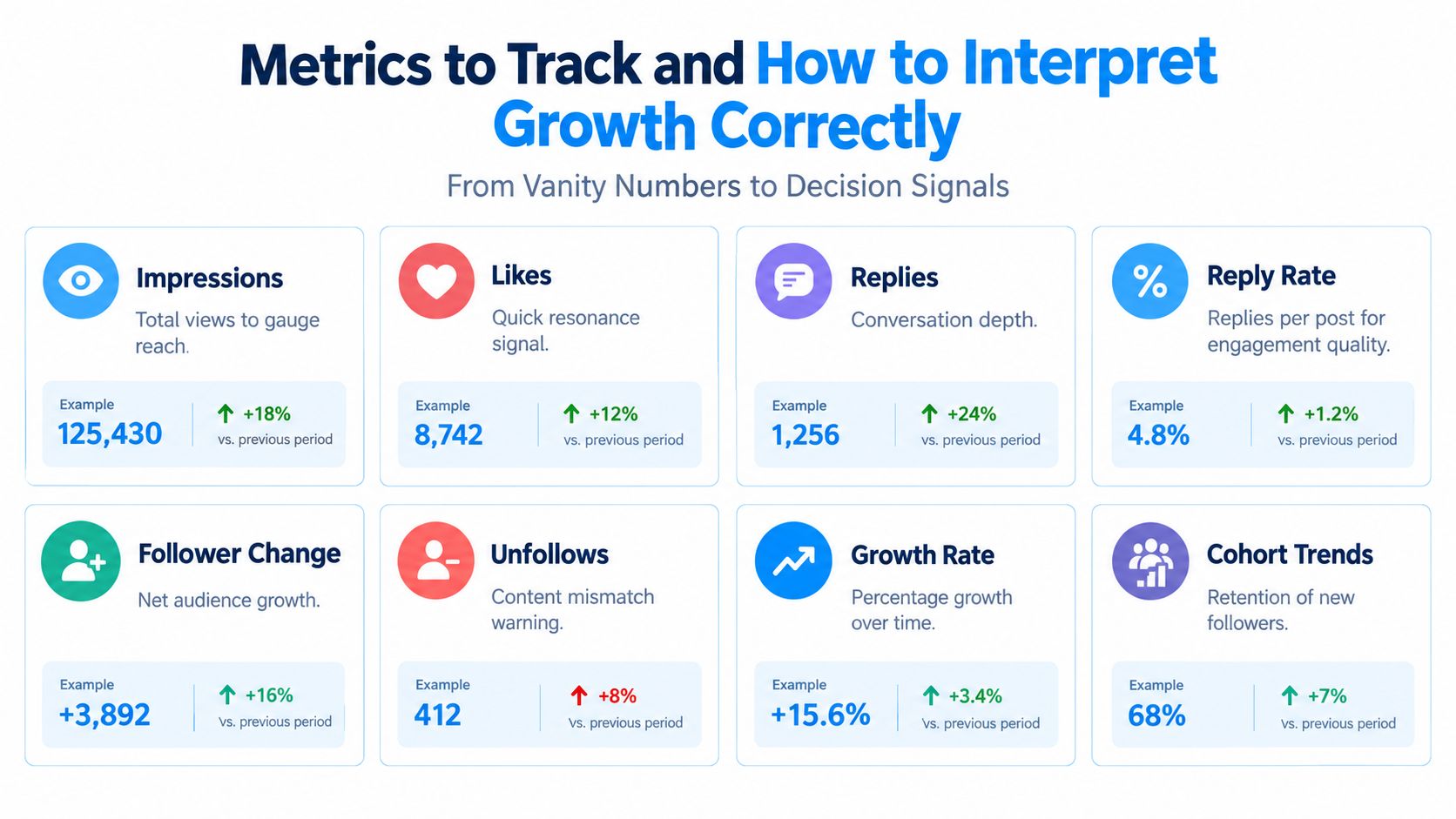
A growth dashboard earns its place when every metric leads to a decision. Impressions show how often X displayed your content. Likes indicate quick approval, while replies expose conversation quality. Profile clicks measure curiosity about the person or company behind a post. Follower change shows whether that attention became an audience.
Read these signals as a connected path:
- Discovery: Did your post reach people beyond existing followers?
- Conversation: Did readers reply, quote-post, bookmark, or repost it?
- Author interaction: Did your replies start follow-up exchanges with relevant accounts?
- Interest: Did viewers open your profile after seeing the post or joining the thread?
- Audience fit: Did followers increase without a matching rise in unfollows?
- Retention: Did new followers interact with later posts?
The sequence matters because a large impression count can hide weak audience fit. A smaller post that creates several thoughtful replies, profile visits, and repeat interactions may contribute more to long-term growth than a high-reach post that produces no continuing relationship.
Use time windows instead of isolated spikes
Follower growth makes more sense across 7-day, 30-day, and 90-day periods than in a single daily snapshot. Independent analytics tools commonly provide these comparison windows, along with historical timelines and regular updates (Twitter analytics tracking overview). Each period answers a different question. The 7-day view helps assess a recent topic or reply routine. The 30-day view shows whether that routine is becoming consistent. The 90-day view helps reveal whether growth survives changes in subject, format, and publishing frequency.
Pair follower gains with unfollows and engagement from newer followers. A post may attract people who like one opinion but have little interest in the account's broader subject. That outcome points to a mismatch between the post's promise and the profile's ongoing value, not necessarily a failed post.
Early reply timing deserves its own comparison. Track whether replies posted soon after a relevant conversation begins create more profile visits or follow-up responses than replies added after the thread has become crowded. Also record interaction depth, such as one reply, a reply followed by a question, or a multi-turn exchange with the author. These signals help distinguish visibility from genuine participation.
Turn reporting into the next action
Use a simple diagnostic table during weekly reviews:
- Impressions rise, replies stay flat: The topic may be discoverable but too broad, predictable, or difficult to answer.
- Replies rise, profile clicks stay flat: Your contribution is useful inside the thread, yet your profile gives readers little reason to continue.
- Profile clicks rise, follows stay flat: Review the bio, pinned post, and recent posts for a clear promise to a specific audience.
- Followers rise, later engagement falls: The post may have attracted people outside your intended niche.
- A narrow topic produces repeated author interactions: Keep monitoring that topic and build related posts around the language people use.
Compare each account against its own earlier performance before using another creator as a benchmark. Account size, niche, publishing history, and audience expectations can make raw totals misleading. A live analytics example reports 711,217 followers, a 27,607 follower change, and a 3.89% change, with a maximum daily change of 3,507 on 18 April 2026 and an average follower change of +8.87 (analytics example and benchmark context). These figures demonstrate the detail available in reporting. They are not sensible targets for every account.
For a practical explanation of native reporting, read this guide to interpreting Twitter analytics. End every review with one specific change, such as narrowing the monitored topic, revising the profile promise, replying earlier in relevant threads, or repeating a format that attracts the right conversations.
Risks Compliance and Smart Next Steps for Sustainable Growth
More automation doesn't automatically produce more growth. It can just help you publish irrelevant replies faster, repeat the same message across unrelated threads, or create a feed that sounds unlike the person behind the account.
X's ranking environment is sensitive to engagement intensity and content type. Controlled research found that engagement-ranked feeds amplified emotionally charged, out-group hostile content relative to reverse-chronological feeds, while a separate browser-extension experiment with 1,256 volunteers over 10 days reported that changing exposure to hostile partisan content altered polarization (controlled research on engagement-based ranking). For a growth workflow, the lesson is not to provoke stronger reactions. It's to maintain quality control when the platform can reward intense attention.
Use these guardrails:
- Review every generated reply: Add genuine context and remove claims you can't verify.
- Respect platform rules: Avoid mass activity, deceptive engagement, unsolicited messaging, and behavior that treats users as targets.
- Protect conversation quality: Choose fewer relevant threads over repetitive comments that add no substance.
- Monitor audience fit: Check unfollows, profile visits, and later engagement instead of celebrating reach alone.
- Keep a human owner: Assign someone to approve sensitive posts, replies, and product claims.
Start with a short trial and one measurable routine. A creator might test opportunity discovery and reply quality. A founder might combine niche monitoring with scheduled build updates. A team might begin with approvals and account-level reporting before adding broader automation. Review the results across consistent time windows, then keep only the workflows that improve relevance, timing, or conversation depth.
XBurst brings style-aware post and reply drafting, high-opportunity conversation discovery, niche trend monitoring, scheduling from its dashboard or Telegram, and engagement analytics into one X growth workflow. Try the XBurst interactive platform during its 3-day free trial, then use the results to build a sustainable routine based on conversations and measurable audience signals.