
Top Hashtags in Twitter: 10 to Use in 2026
Find the top hashtags in Twitter for founders, creators, marketers, and AI builders, with practical tips for choosing and using each tag on X.
The biggest hashtag isn't automatically the best opportunity. A crowded tag can expose a post to a huge but distracted audience, while a focused community tag can put the same post in front of people who understand the problem, recognize the context, and are more likely to reply. Hashtag activity on X is heavily concentrated: in a dataset of 156 million tweets, 73% of hashtags were used only once, while a small group of high-frequency tags dominated the visible layer (AAAI research). Popularity, in other words, signals attention, not fit.
This list ranks the top hashtags in Twitter, now X, by opportunity and use case rather than by a simplistic popularity count. The ranking considers audience fit, conversation quality, content intent, discoverability, and how naturally each tag supports a launch, insight, journey update, thread, or experiment. A hashtag should strengthen a clear point of view, not substitute for one.
The examples below also show when to use a broad community tag, when to narrow the conversation, and when timing matters more than the tag itself. If you need help scanning niche trends, finding timely conversations, scheduling consistently, and measuring engagement, XBurst offers an optional workflow for doing that without turning every post into a hashtag experiment.
1. #BuildInPublic
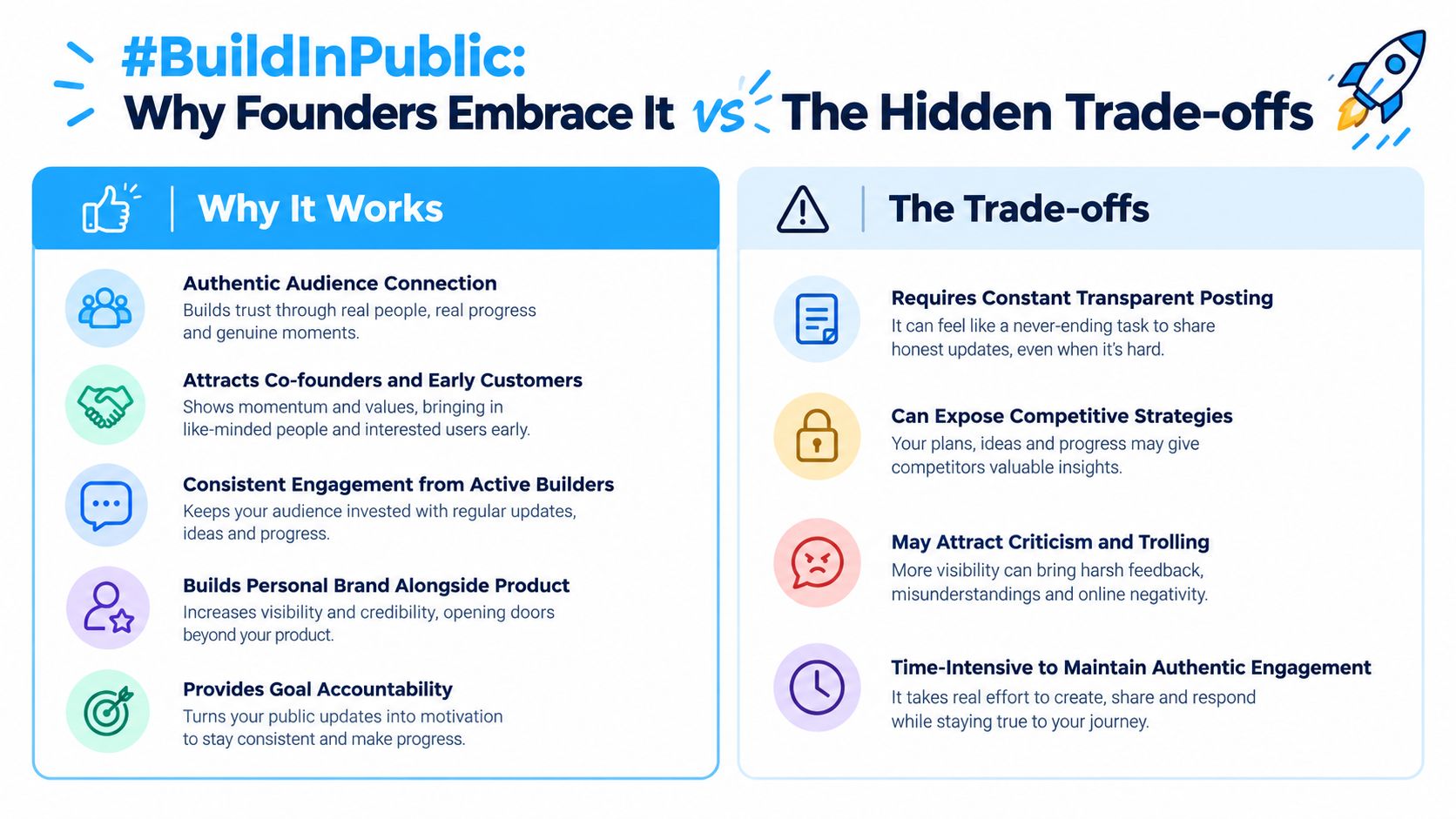
#BuildInPublic earns the top position because it connects a visible process with a specific audience. Founders, makers, and creators use it to share decisions, setbacks, product changes, customer feedback, and lessons while the work is still happening. That makes the tag more useful for relationship-building than for a one-off announcement.
A founder launching a small software product could post a weekly progress note, explain what changed, and invite feedback from other builders. A creator developing a newsletter could share the editorial decision behind a new format rather than only promoting the finished issue. The strongest posts make the journey relevant to the reader by connecting an update to a problem the audience also faces.
What earns attention here
Specificity matters more than polished optimism. Share the decision, the evidence behind it, and what you'll do next. A post about changing an onboarding flow is more useful when it explains the observed friction and the question the change is meant to answer.
- Show the uncomfortable parts: Explain failed launches, unclear positioning, rejected ideas, and difficult trade-offs without turning the post into a confession.
- Publish recurring updates: A consistent rhythm helps readers understand progress over time, even when individual updates are small.
- Invite useful participation: Ask for feedback on a concrete decision rather than requesting general support.
- Use threads for turning points: An origin story, product pivot, or customer discovery lesson can support a deeper sequence of posts.
Practical rule: Share what changed, why it changed, and what you're testing next. Transparency without a lesson is only an update.
The trade-off is exposure. Public decisions can attract valuable feedback, but they can also create pressure to perform progress for an audience. Use #BuildInPublic when the audience can learn from the process, not merely watch it.
2. #IndieHacker
#IndieHacker offers a focused route into conversations about independent products. Compared with the broader #BuildInPublic, it suits posts about launches, bootstrapping, distribution, pricing, technical limits, and the practical constraints of building outside a large organization.
Its opportunity depends on context, not popularity alone. A launch announcement may reach interested makers, but a post explaining the selected distribution channel, an abandoned assumption, or a product's difference from alternatives gives readers something they can apply. A focused community tag can outperform a crowded broad tag when the post addresses a clear problem for that community.
Choose the use case before the hashtag
Use #IndieHacker when independence shapes the decision being discussed. A developer releasing a tool after work, a solo founder testing a paid product, or a small bootstrapped team has a credible reason to join the conversation. A large company attaching the tag to a generic announcement may gain impressions, yet the mismatch can weaken trust.
Select the format according to the audience and objective:
- Launch post: State the user problem, describe the first version, and identify what you left out. Pair the tag with a clear product image or concise demo.
- Learning update: Explain a failed assumption and the evidence that changed your approach. This format can prompt more useful replies than a polished success claim.
- Feedback request: Ask makers to review one specific product, pricing, or onboarding decision. Narrow questions produce more actionable responses.
- Point of view: Explain why your distribution, product, or business model differs from the usual approach.

Credibility determines whether the tag helps. Readers can separate a genuine build log from promotion presented as transparency. Attach any product mention to a lesson, question, or observation, then use later posts to show progress after launch day. This sequence gives the hashtag a continuing role instead of making it a one-time distribution tactic.
3. #AITwitter
The broad reach of #AITwitter is not its strongest advantage. The tag combines artificial intelligence research, machine learning applications, large language models, product development, prompt experiments, and safety discussions. That range attracts several professional audiences, while also creating competition. A generic AI opinion can vanish beside technical announcements, product commentary, and speculation.
Rank the tag by opportunity, not volume. It suits a post with a testable claim, a visible workflow, or a product decision that affects how people use AI. A product builder can show an AI feature handling a real task, including its failure points. A researcher can translate one limitation into accessible language. A practitioner can compare prompting methods and explain why one produced a more useful result. A creator describing an AI-assisted editorial process can also use this guide to using AI for content creation to frame AI as support for editorial judgment.
Give readers enough to inspect
The strongest posts provide the task, method, output, and limitation. That context lets readers reproduce the test, challenge the interpretation, or adapt the approach. Confidential prompts and sensitive data can remain private, provided the explanation still shows what happened.
Use a focused angle:
- Specific discovery: Show one capability, workflow, or constraint instead of making a broad claim about AI.
- Documented failure: Explain where an unreliable answer appeared and what it changed in your process.
- Responsible application: Address safety or ethical concerns when they affect the stated use case.
- Adapted experiment: Credit the original idea, then identify what you changed and learned.
The trade-off is speed. AI products and debates shift quickly, so an observation can lose relevance. Use #AITwitter for a current test, product choice, or clearly explained implication. Pair it with a short demonstration for practitioners, a plain-language explanation for broader audiences, or a reply thread that records the method. Timing can widen exposure, but evidence determines whether the attention becomes useful discussion. Mentioning automation alone is a weak reason to choose the tag.
4. #MarketingTwitter
#MarketingTwitter offers a focused audience for positioning, campaign analysis, messaging, and channel decisions. Its reach is narrower than a broad marketing tag, yet that focus can create better opportunities when a post addresses a problem that practitioners recognize immediately.
Use the tag when the content gives readers material to assess or apply. For example, a content strategist might compare an educational article with a product-led landing page, explaining the audience and conversion goal behind each choice. A growth marketer could show how a campaign structure reflects its distribution channel. A brand manager might examine a public campaign by identifying its strategic choices, trade-offs, and likely audience response.
The strongest format depends on the idea:
- Framework post: Share a positioning worksheet, brief structure, or launch sequence that readers can adapt.
- Campaign analysis: Examine one visible decision rather than labeling the whole campaign successful or unsuccessful.
- Decision thread: Walk through the constraint, options, choice, and expected consequence when the reasoning needs more space.
- Short post: State one practical lesson when the insight is narrow and easy to apply.
Avoid generic advice about consistency, authenticity, or customer focus unless the post connects it to a specific decision. Name the audience, constraint, message, and action. Examples from recognizable companies can clarify a principle, but the analysis should remain useful without relying on the company's reputation.

Choose #MarketingTwitter for expertise-led content, not a direct service announcement. Lead with the marketing problem, then connect your approach to the lesson. A focused community tag can outperform a crowded broad tag when the format and message match the audience's working needs.
5. #GrowthHacking
Popularity does not make #GrowthHacking a strong choice for every growth post. The tag works best when the content examines an acquisition experiment, product-led distribution, referral loop, activation decision, retention effort, or another specific route to user growth.
Lead with the business problem and the test, not a list of clever tactics. A founder could explain which behavior a referral loop was designed to encourage. A product manager might show why a particular activation event was selected. A marketer could compare two acquisition channels, including the operational work each required. These examples give the hashtag a clear use case and help readers judge whether the lesson applies to their own product, audience, and business stage.
The phrase “growth hacking” can also attract shortcut claims and inflated promises. Connect each mechanism to customer value, then state what the experiment can and cannot prove. A tactic is not a strategy just because it is unusual.
Structure the post around four decisions:
- What was the hypothesis: Name the behavior or outcome you expected.
- What did you change: Identify the product, message, channel, or process under review.
- What did you learn: Separate the observed result from your interpretation.
- What happens next: Say whether you will continue, revise, or stop the experiment.
Use a thread when the test has several stages, dependencies, or decisions. Use a concise post when one observation supports one practical lesson. Pair the tag with a concrete example and publish when the relevant growth community is active. A focused #GrowthHacking post can reach a more relevant audience than a broad “get more users” message, especially when its format and timing fit the conversation.
6. #DataDriven
#DataDriven is most useful when a post shows how evidence changed a decision. A metric alone creates little insight. Readers need its definition, comparison, limits, and the action that followed.
This tag fits product analysis, marketing reporting, cohort discussions, experiments, and operational reviews. A product manager could connect a feature change to a specific user behavior. A marketing team might explain how channel data reshaped its editorial priorities. An analyst could test a popular assumption by showing what the available evidence supports and what it cannot establish.
The opportunity is narrower than a broad reach tag, but the audience may be more relevant. Use #DataDriven when the post offers a method that a product, marketing, or operations professional can apply. A focused evidence post can outperform a crowded generic business topic when the example, format, and timing match an active conversation.
Build the post around the decision, not the dashboard:
- Define the measure: Explain what the metric represents in this case.
- Set the comparison: Identify the time frame, segment, or baseline.
- State the observation: Separate the recorded result from your interpretation.
- Explain the decision: Show what changed, continued, or stopped because of the evidence.
A short post suits one finding with one practical implication. Use a thread when the analysis needs context, method, limitations, and a sequence of decisions. Screenshots can support a familiar professional audience, but concise explanation gives unfamiliar readers a reason to continue.
A data-driven content strategy framework can help connect measurement with editorial choices. Publish when the relevant community is active, and treat engagement as a response to the presentation, not proof that the analysis is correct.
7. #Threads
#Threads identifies a format rather than a profession, so its value depends on whether the idea needs a sequence. It can signal an extended explanation, yet it cannot compensate for a weak opening or unclear payoff. A concise post may perform better when the point needs no additional context.
Use the tag for product strategy breakdowns, technical explanations, founder lessons, research summaries, and structured commentary. A failed-launch thread can trace the initial assumption, supporting evidence, decision, result, and revised approach. A technical sequence can introduce a concept, demonstrate it, explain its limits, and finish with a practical application.
Choose the format before the hashtag
Start with the reader's question: what will become clearer by the final post? If the answer involves connected reasoning, examples, or decisions, #Threads has a stronger use case than a broad topic tag alone.
A thread should earn each continuation:
- State the promise: Open with the conclusion, problem, or tension the sequence will resolve.
- Control the progression: Number posts and give each one a distinct purpose.
- Support the claim: Use examples, diagrams, observations, or qualified evidence rather than slogans.
- Finish with application: Summarize the lesson and invite a response from the relevant audience.
The guide to writing viral Twitter threads can help plan the sequence, but virality is only one possible outcome. A thread that generates informed replies from the intended professional community may be more useful than one that attracts casual impressions.
A thread earns its length by changing the reader's understanding, not by splitting one sentence into many posts.
Pair #Threads with a focused subject tag when the format and topic both aid discovery. Use it alone when the sequence is broadly relevant. For a short opinion or announcement, omit it, since the label may add clutter without explaining the post.
8. #ContentCreator
#ContentCreator reaches video makers, podcast hosts, newsletter writers, bloggers, and social media publishers. That range supports networking, yet it also reduces targeting precision. A newsletter creator seeking replies from other writers may gain more from a focused newsletter or writing tag, while a broad creator post can reach collaborators across formats.
Use the tag for decisions about making and distributing content, not as a generic label for every published asset. A newsletter creator could repurpose a research-heavy article into a five-post X thread, rewriting the opening hook for faster context on X. If saves exceed replies, the creator might develop another reference-style post. If replies reveal a recurring question, that response can guide the next newsletter topic. The example connects format, audience feedback, and a specific publishing decision.
Match reach to the conversation
Pair #ContentCreator with a narrower community or format tag when discovery and relevance both matter. A podcast host discussing guest preparation could add a podcast-focused label. A short announcement may need no hashtag if the existing audience already provides sufficient context.
- Document a process: Show how you plan, edit, or distribute one format.
- Name a constraint: Explain how limited time, equipment, research depth, or platform conventions shaped the result.
- Invite a defined collaboration: State which creator, skill, or project would benefit.
- Recommend a tool through an outcome: Identify the problem it solved rather than listing features.
Broad reach does not guarantee useful attention. Lead with the specific decision or lesson, then use #ContentCreator to connect that post with the wider creator community. Choose a focused tag instead when the intended audience matters more than cross-format visibility.
9. #StartupLife
#StartupLife offers broader discovery than a narrow founder tag, but its value depends on the human decision behind the post. The conversation includes fundraising pressure, hiring, management, uncertainty, burnout, pivots, rejection, and the emotional work of building a company. A post can share a leadership lesson or personal reflection without exposing detailed operations, as #BuildInPublic usually does.
Use the tag when the story has a consequence readers can examine. An investor rejection becomes useful when the founder explains what changed in the pitch. A difficult team decision becomes discussable when it reveals a communication lesson. A polished hiring announcement may reach the right audience, yet it gives that audience little reason to respond.
A short reflection, a text post, or a thread can all fit. Match the format to the evidence: use a concise post for one lesson, a thread for a sequence of decisions, and a reply-led update when the goal is peer discussion. Timing also affects the trade-off. A fundraising or hiring update may attract broad attention, while a quieter post about uncertainty can build stronger connections within the founder community.
Choose substance over startup theatre
Credibility comes from naming the decision, constraint, or lesson without exposing private details or presenting burnout as proof of commitment.
- Explain a leadership choice: Show how a management decision changed your approach.
- Make persistence specific: Name the obstacle and the behavior that helped.
- Discuss wellbeing responsibly: Describe the cost without glorifying exhaustion.
- Join the community: Reply to founders at a similar stage, rather than broadcasting alone.
Expect a mixed audience of entrepreneurs, employees, prospective hires, investors, and observers. Keep the post constructive, precise, and respectful of everyone involved.
10. #SideProject
#SideProject offers a focused audience for work built beside a job, studies, caregiving, or another major commitment. Its opportunity comes from the constraint, not from startup scale. Readers can assess how a maker sets scope, uses limited time, and learns without a full-time venture's resources.
Use the tag when the post shows a decision that other makers can apply. A short update might explain what shipped during one work session, why a feature was postponed, or how feedback changed the next version. A launch announcement can attract attention, while an experiment log gives readers more to discuss because it exposes the choices between milestones.

Match the tag to the project's stage
Choose the format according to the evidence available. A concise text post suits one lesson. A thread works for several decisions or a sequence of tests. A reply-led update suits peer discussion, particularly when you want feedback rather than reach.
- State the stage: Say whether you are exploring, building, testing, or maintaining.
- Show the trade-off: Explain what limited time prevented and why that choice was reasonable.
- Make learning visible: A discarded idea can provide more value than a polished result.
- Invite specific input: Ask makers to review an assumption, suggest a test, or share a comparable experience.
#SideProject can outperform #IndieHacker when the work remains exploratory or part-time. It fits better than #BuildInPublic for a single experiment rather than an ongoing reporting commitment. Pair it with a practical demo for technical readers, a brief reflection for fellow makers, or a progress thread when the project has several stages. Popularity may bring impressions, but relevance and a clear question create the stronger reason to respond.
Top 10 Twitter Hashtags Comparison
| Item | Implementation Complexity 🔄 | Resource Requirements ⚡ | Expected Outcomes ⭐📊 | Ideal Use Cases 💡 | Key Advantages ⭐ |
|---|---|---|---|---|---|
| #BuildInPublic | Medium, ongoing, structured updates and transparent storytelling | Moderate–High time commitment; low monetary cost | Community growth, early users, stronger personal brand | Early-stage founders seeking feedback, accountability, and community | Authentic engagement; attracts cofounders/investors |
| #IndieHacker | Low–Medium, simple posts and launch narratives | Low monetary needs; steady time for engagement | Bootstrapped validation, small revenue streams, collaborations | Solo founders and bootstrapped makers launching products | Supportive community; practical bootstrapping tactics |
| #AITwitter | High, requires technical credibility and rapid iteration | High expertise; sometimes compute/resources for demos | Fast visibility among researchers and builders; trend leadership | AI researchers, ML engineers, AI-product founders | Early access to innovations; high technical signal |
| #MarketingTwitter | Medium, needs domain knowledge and concrete cases | Moderate (campaign data, case studies) | Thought leadership, lead generation, tactical learnings | Marketers, growth teams sharing campaign results | Actionable frameworks; professional audience reach |
| #GrowthHacking | Medium–High, experimental setups and measurement | Moderate tools/analytics; iterative testing time | Rapid user acquisition, measurable ROI when successful | Startups needing scalable acquisition on tight budgets | Innovative, cost-effective growth tactics |
| #DataDriven | High, rigorous metrics, methodology, and validation | High (analytics tools, datasets, reporting time) | Credible, reproducible insights and measurable decisions | Data analysts, PMs, growth teams prioritizing KPIs | Establishes credibility; evidence-based persuasion |
| #Threads | Medium, requires planning, hook, and narrative flow | Low monetary cost; moderate writing time | Higher engagement and long-form visibility | Deep dives, tutorials, case studies, thought leadership | Increased discoverability and shareability |
| #ContentCreator | Medium, cross-platform strategy and production | Variable (from low to high production resources) | Audience growth and monetization opportunities | Multi-platform creators building audiences and partnerships | Wide networking; access to tools and monetization tips |
| #StartupLife | Low–Medium, personal storytelling and candid updates | Low time but high emotional labor | Community support, empathy, long-term trust | Founders sharing candid lessons, culture, and wellness | Humanizes founders; fosters supportive community |
| #SideProject | Low–Medium, periodic updates, incremental progress | Low monetary cost; limited time availability | Validation, gradual traction, potential side income | Part-time builders testing ideas before full commitment | Low-risk experimentation; accountability and motivation |
Turn Hashtags Into a Repeatable X Workflow
The ranking matters less than the matching process. Start with the post, not the hashtag. Identify the audience you want to reach, the action you want the reader to take, and the type of content you're publishing. Then choose one primary tag that names the conversation accurately.
A launch, a product lesson, and a personal reflection may concern the same company but belong in different communities. #BuildInPublic or #StartupLife can support trust and founder context. #IndieHacker or #SideProject can reach makers working with leaner constraints. #MarketingTwitter and #DataDriven fit professional expertise, while #Threads helps signal that the value is in a longer explanation.
Use a narrower second tag only when it improves relevance. A broad community label paired with a specific format or audience can clarify the post, but adding tags for every adjacent topic usually weakens the message. X hashtag activity has a long tail, and the concentration of attention means a visible tag isn't automatically a useful one (AAAI analysis).
A practical publishing routine
- Choose the primary audience: Decide whether the post is for founders, independent makers, marketers, analysts, creators, or a broader startup community.
- Name the content intent: Match the tag to a launch, insight, journey update, experiment, or thread.
- Write the post without hashtags: The argument, example, or question should still make sense on its own.
- Add only relevant context: Use a second tag only when it gives readers a clearer route into the conversation.
- Check the current stream: Review recent posts for tone, meaning, spam, and whether the tag is still active in your niche.
- Review the result: Compare impressions, likes, replies, and engagement rates across posts with different tag choices.
Treat the results as directional evidence rather than a guarantee. A hashtag can help the right people find a post, but the opening, timing, format, and usefulness still determine whether they stop and respond. A high-volume event can dominate X for a short period. For example, #TwitterBestFandom recorded 60,055,339 uses in a 24-hour period between 16 and 17 March 2019, according to Telefonica's historical overview of popular hashtags. That illustrates burst capacity, not a repeatable strategy for every account.
Rotate tags by objective
Don't force one hashtag to serve every post. Rotate according to the relationship you want to build and the content you can consistently produce.
- Build trust: Use #BuildInPublic or #StartupLife for transparent decisions, challenges, and lessons.
- Reach makers: Choose #IndieHacker or #SideProject when the audience shares your product-building constraints.
- Share expertise: Use #MarketingTwitter or #DataDriven when the post contains a practical framework, analysis, or method.
- Package deeper ideas: Use #Threads when a sequence improves the explanation.
- Document applied AI work: Choose #AITwitter for a specific experiment, limitation, or implementation lesson.
- Connect with creators: Use #ContentCreator when the topic concerns the production and distribution process.
XBurst can support the operational side of this routine by scanning timelines for relevant conversations, monitoring niche trends, helping create style-consistent replies, scheduling posts, and measuring impressions, likes, replies, and engagement rates. Those features are useful when you want to participate consistently, but they shouldn't replace reading the conversation or writing something relevant.
The strongest hashtag strategy is selective. Publish a clear post, enter a conversation where you have a reason to contribute, and measure whether the resulting attention came from people you want to reach. Popularity can open a door, but relevance determines whether anyone stays.
XBurst helps creators, founders, and brands scan X for high-opportunity conversations, monitor niche trends, generate on-brand replies and posts, schedule consistently, and measure engagement. Visit XBurst to connect hashtag research with a practical workflow for authentic audience growth.