
How to Use Hashtags on Twitter for Real Growth
Learn how to use hashtags on Twitter to drive real engagement. Discover research methods, optimal placement, and how to measure impact with XBurst.
Most advice on Twitter hashtags is stuck in the past. It tells you to add five or six popular tags, attach every trending phrase to your post, and hope the extra labels create a viral lift. That approach usually produces crowded copy, weak audience alignment, and impressions from people who have no reason to follow you.
The better question isn't “Which hashtags can make this post go viral?” It's “Does this post belong in a conversation that people are actively following?” Hashtags can help with discovery, but they don't replace a clear idea, a useful reply, or a reason to engage. If you're learning how to use hashtags on Twitter, treat them as a precise distribution choice, not decoration.
The Modern Reality of Hashtags on X
Hashtags are a filing system, not a shortcut to virality. On 23 August 2007, Chris Messina proposed using the # symbol to group messages on Twitter. By 2009, users were applying hashtags to major events, including Michael Jackson's death and the Iran elections. The feature had moved from experiment to global conversation index. This history of Twitter hashtags helps explain why discovery remains their primary job.
A tag can identify a post's subject and connect it with related conversations. It cannot make a weak idea useful, and a larger set of tags does not automatically earn wider distribution. X evaluates the post itself and the engagement it receives, so clear wording, useful information, timing, and conversational relevance matter more than raw hashtag volume. Current guidance on hashtagging also supports choosing tags for relevance and engagement rather than broad exposure.
Practical rule: Add a hashtag when it helps the right audience identify or join the conversation. Leave it out when it only repeats words already obvious in the post.
This makes hashtag selection a distribution decision. Lead with the insight, then add one specific tag if it connects the post to an active community, event, campaign, or focused topic stream. A post about a niche customer-retention problem may perform better with a relevant specialist tag than with a saturated marketing trend. The post should remain clear and worthwhile if the hashtag disappears.
The usual stack, such as #Marketing #Growth #SEO #Startup, often spends attention before the reader reaches the point. Broad tags can also attract impressions from people who have no reason to reply, follow, or return. Minimalism protects readability and gives each discovery signal a clear purpose. Measure whether tagged posts bring relevant engagement, not just additional views, then keep the tags that help people enter the right conversation.
Researching High-Opportunity Tags for Your Niche
The right hashtag usually isn't the most popular one. It's the tag with enough current activity to support discovery, but enough topical focus that your post can reach people who care about the subject.
Research on Twitter hashtag distributions found heavy-tailed behavior, including Zipf's-law patterns with faster-than-simple-power-law decay. In practical terms, a small group of hashtags captures disproportionate attention while most tags remain rare. The underlying research on hashtag distributions supports a selective approach rather than a volume-based one.
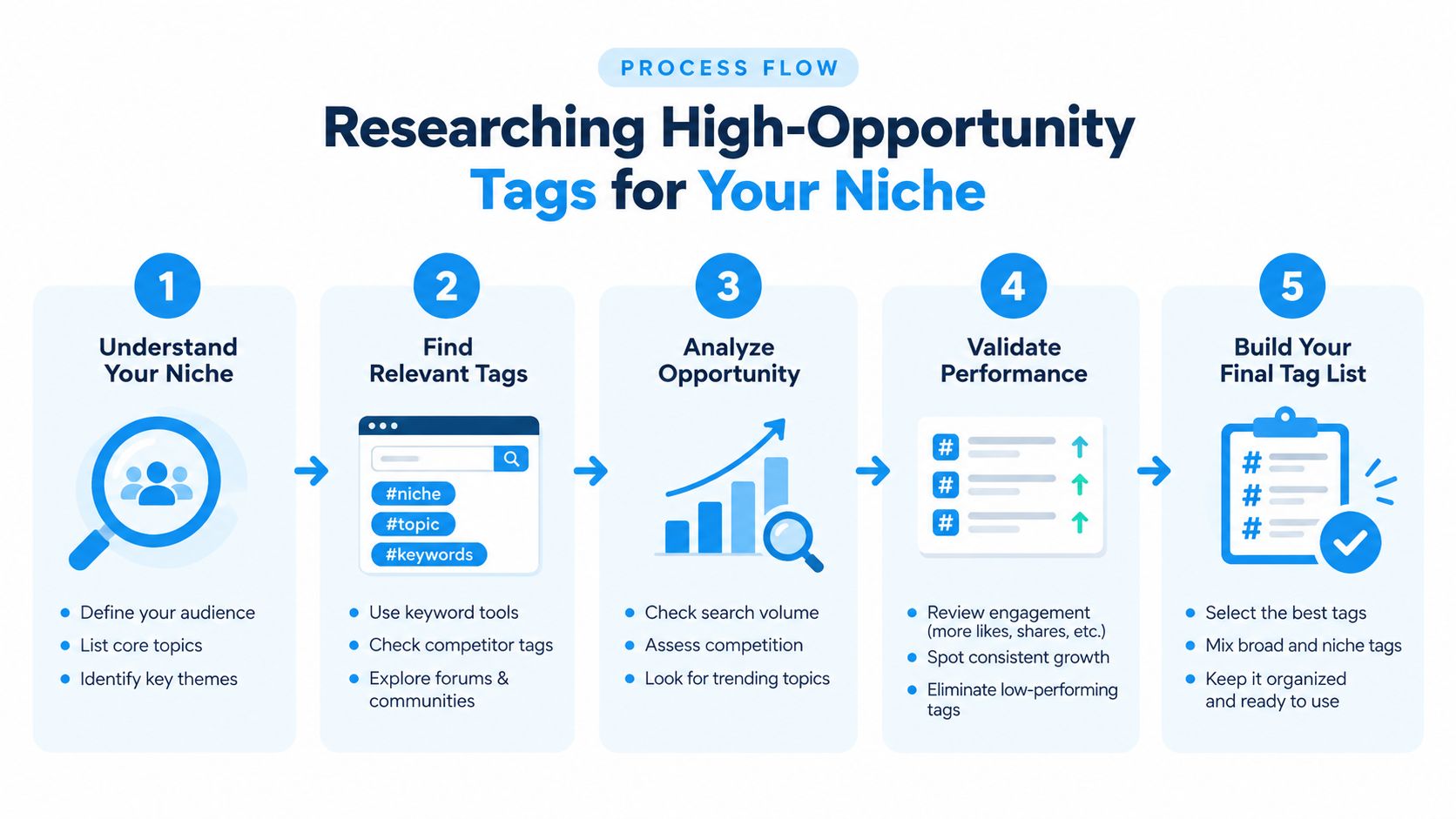
A practical research sequence
Start with the topic, not the tag. Write down the exact subject of the post and the audience you want to reach. “Founder fundraising lessons” gives you a better starting point than the vague goal of “more visibility.”
Search the phrase on X. Review the results for related wording, recurring community labels, event tags, and language your audience uses. Don't assume the phrase that sounds best in a planning document is the one people use in live conversations.
Open the Latest tab. Look for recent posts that are genuinely about your topic. A tag can appear popular while producing little useful activity, so check whether people are publishing current, relevant posts rather than recycling promotional content.
Inspect the audience. Read several posts and replies. If the stream is dominated by bots, unrelated industries, giveaways, or automated promotion, reject the tag even if it looks busy. A noisy audience can create impressions without creating qualified conversations.
Compare nearby options. Search a broader tag and a narrower one. The broader tag may expose you to more people, while the niche tag can create better context. Choose the one that matches the post, or use both only when each adds a distinct discovery path.
For adjacent research on social discovery, marketers can also use this guide to top hashtags for Instagram Reels growth, while remembering that platform behavior differs. For X-specific examples and selection ideas, see XBurst's guide to top hashtags on Twitter.
How to judge whether a tag is alive
Don't rely on a trending label alone. Search it, review recent posts, identify who is participating, and ask whether your post would contribute something useful. Event-based and community-based tags are often more valuable than broad evergreen labels because they represent an actual group of people sharing a moment or interest.
A good tag should pass three tests:
- Topical fit: It describes the post without stretching the meaning.
- Live activity: People are using it in current conversations.
- Audience quality: The participants resemble the readers, customers, or peers you want to attract.
Applying Hashtags in Posts Replies and Threads
Placement depends on the format. A standalone post has room for a tag to support the central idea, while a thread needs visual continuity and a reply needs conversational credibility. The same hashtag can feel useful in one setting and forced in another.
Multiple social-media guides report that hashtagged tweets receive about twice as much engagement as tweets without hashtags, while the same research-backed guidance recommends limiting usage to one or two relevant hashtags for a balance between discovery and readability. Buffer's review of hashtag research captures that trade-off clearly.
Standalone posts
Write the sentence first. Then decide whether a tag helps someone find the discussion. If the tag fits naturally into the sentence, use it inline. If it would interrupt the wording, place it at the end with enough separation that the post still reads like a complete thought.
For example:
Better: A clear onboarding checklist can remove friction for new users. #ProductLedGrowth
Also effective: #IndieHackers often share practical lessons about launching before a product feels finished.
The second example works because the tag names the community being addressed. The first uses the tag as a topic label. Neither begins with a pile of categories, and neither asks the hashtag to carry the message.
Use one tag when the post has one obvious context. Use a second only when it adds a separate, useful layer, such as a niche community alongside an event tag. Keep the most specific tag first, especially when the two labels differ in scope.
Threads and replies
A long thread should feel like one coherent piece of writing. Repeating tags on every post creates visual noise and makes the thread look automated. Put a relevant hashtag in the opening post if it helps people understand the subject, or reserve it for the final post when you want readers to find related discussion after finishing the thread.
Replies require more restraint. A reply should answer, challenge, clarify, or extend the original post before it attempts to improve discovery. Add a tag when you're joining a recognizable live conversation, not when you're trying to redirect another user's audience toward an unrelated offer.
For more guidance on contributing without making replies feel promotional, consult these Twitter engagement tactics for 2026 and review practical advice on how to reply to a tweet. The principle is simple: the contribution comes first, and the tag comes second.
Tracking Performance and Measuring Impact
A hashtag earns its place when it helps the right people find a post and take a useful next step. That action might be a reply, profile visit, click, follow, or continued participation in the conversation. Impressions matter, but they are only the first signal.
Evaluate tags alongside the content pattern around them. A broad tag can expand exposure while attracting shallow interaction. A niche tag may produce fewer views but more relevant replies, profile visits, and followers who remain active. Your reporting should separate those outcomes instead of treating reach as the result.
Build a controlled comparison
Hold the subject, format, posting cadence, and audience direction reasonably consistent while changing the hashtag choice. Compare posts with no tag, one specific tag, and two relevant tags when each option fits the message. A live X account will not provide a perfect scientific experiment, yet a controlled comparison is more reliable than memory or a single viral result.
Run the comparison for at least four weeks. Review impressions, engagement rate, and profile visits to judge whether each tag produces qualified reach. This hashtag testing guidance treats hashtags as a discovery layer and recommends placing the most specific tag first.
Record these measures for every post:
- Impressions: Did the tag extend reach beyond your usual audience?
- Engagement rate: Did viewers interact at a useful rate relative to exposure?
- Profile visits: Did the post give interested people a reason to inspect the account?
- Reply quality: Did responses come from relevant peers, prospects, customers, or community members?
- Follower behavior: Did new followers continue engaging with related content?
Tag performance also depends on algorithmic engagement signals. A relevant post that earns substantive replies can create stronger distribution than a loosely related tag that generates passive views. Track the quality and direction of the interaction, not only its volume.
Read the pattern, not the outlier
One unusually strong post may owe its performance to timing, a sharper hook, a prominent reply, or a news event. Compare similar topics and formats before changing your hashtag workflow. If one niche tag repeatedly brings relevant replies and profile visits, keep testing it. If a broad tag produces views without meaningful action, reduce its role or remove it.
Use analytics notes to separate discovery value from content value. A tag can help a strong post get found, but it cannot repair a weak argument or unclear invitation to respond. For a broader measurement framework, use this guide on how to measure content performance. Review results regularly, then keep the smallest set of tags that consistently supports relevant discovery and community participation.
Common Mistakes and How to Avoid Them
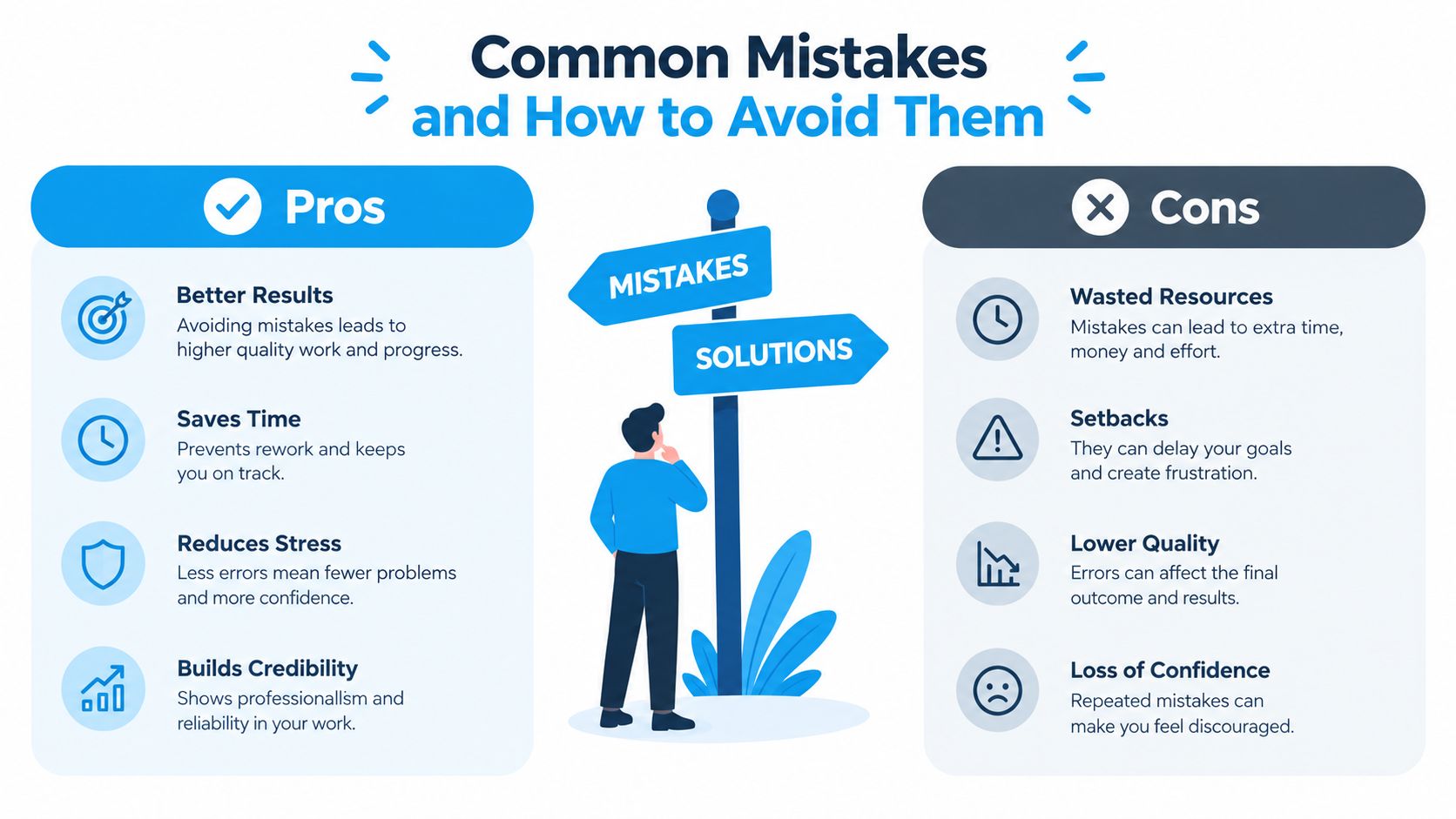
Hashtag mistakes often begin with a flawed assumption: every post needs extra distribution. Adding a tag to rescue an unclear idea rarely works. Copying a popular label from an unrelated conversation creates attention without relevance. Both tactics can put the post in front of people who have no reason to read, reply, or follow.
The clearest failure is hashtag stuffing. Posts using more than two hashtags can see engagement fall by 17%, while posts using five or more are associated with roughly 40% lower engagement, according to this analysis of hashtag usage on X. Treat those figures as a practical warning, not a target. Use the smallest number of tags that adds context.
Broad reach versus useful reach
A broad tag creates a larger potential stream, but your post competes with unrelated content and disappears quickly. A niche community tag reaches fewer people, yet those viewers are more likely to understand the subject and join the discussion. Choose according to the post's purpose, not the apparent size of the tag.
| Choice | What it can offer | What can go wrong |
|---|---|---|
| Broad evergreen tag | General categorization | Your post may disappear among unrelated content |
| Niche community tag | Stronger audience alignment | The stream may be quieter |
| Live event tag | Participation in a current discussion | The value may fade when the event ends |
| Unrelated trending tag | Temporary attention | Audience mismatch and spam association |
A trending phrase about entertainment, politics, or a major event does not belong on a product announcement just because it attracts attention. The mismatch can bring irrelevant replies, make the account appear opportunistic, and distract from the announcement. Saturation is not the same as opportunity.
Small errors that weaken good posts
Keep hashtags readable. A sentence interrupted by several tags is harder to scan, while obscure abbreviations can exclude the audience you want. Check capitalization where it improves readability, and avoid repeating the same pair on every post when the subjects differ.
Relevance also matters because X evaluates the content and engagement surrounding a post, not tags in isolation. Neutral guidance on what hashtagging does today explains that content and engagement signals carry more weight than hashtag volume. A focused post with meaningful community participation can outperform a crowded post chasing a saturated trend. Remove any tag that adds no clear discovery path or conversation context.
Building a Sustainable Hashtag Workflow
A sustainable system makes hashtag decisions before publication instead of adding random labels during the final editing pass. Start with the post's subject, intended audience, and conversation. Then decide whether a hashtag creates a meaningful route to that audience.
Use this compact workflow:
- Define the context. Identify whether the post belongs to a niche, event, campaign, or active community.
- Search the candidate tag. Check current results and review the Latest tab before publishing.
- Reject low-quality streams. Avoid tags dominated by bots, unrelated posts, or automated promotion. Independent guidance on checking hashtag quality recommends this search-first approach.
- Choose zero, one, or two. If the post is already clear and no useful conversation exists, publish without a tag.
- Place the specific tag first. Keep it in the sentence when that sounds natural, or set it apart at the end.
- Review performance weekly. Compare relevant replies, profile visits, engagement rate, and follower quality rather than impressions alone.
- Prune without sentimentality. Remove tags that repeatedly attract the wrong audience, create clutter, or fail to support discovery.
The central habit is participation. A hashtag should point toward a conversation you're prepared to join, not act as a substitute for joining one. Search for active discussions, publish a useful thought, reply to people who engage, and let the data determine which tags deserve another test.
XBurst helps creators and teams find high-opportunity conversations, monitor niche trends, draft on-brand posts and replies, schedule content, and review engagement analytics for X. Visit XBurst to connect hashtag research with a more consistent, data-driven growth workflow.